
Factory guide
Hot-Bent vs Glued Sintered Stone Basins: A Buyer's Decision Guide
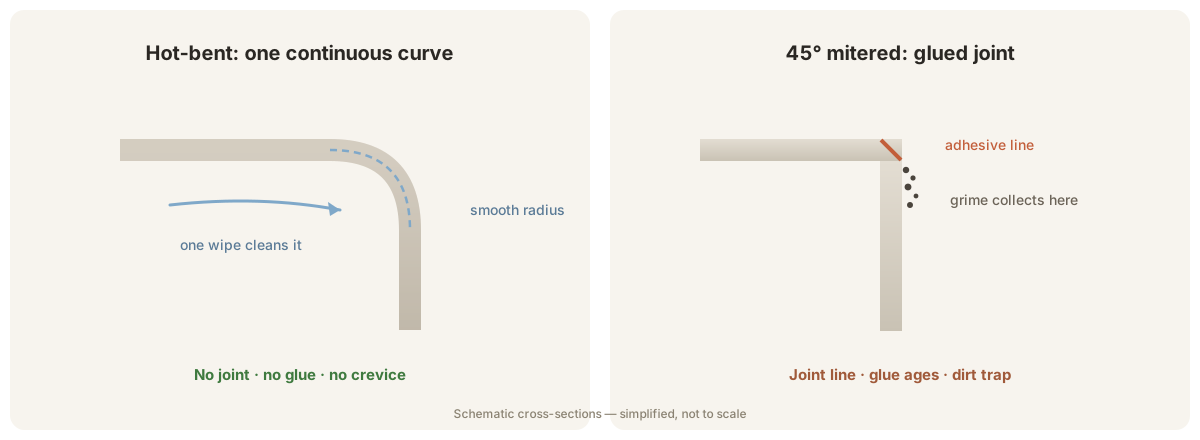
A hot-bent basin is bent from a single heated slab — no glued seam at the bend. A glued (45° mitered) basin is assembled from cut pieces joined with adhesive. Choose hot-bent when a failed joint would cost you callbacks — hotels, premium homes, your own brand line. Choose glued when unit price decides the order.
That is the whole decision in one paragraph. The rest of this guide is for buyers who want the reasoning behind it, the verification checks that keep suppliers honest, and the traps to avoid on either side. If you want the full technical comparison of the two constructions, our hot-bent basin guide covers the process step by step. New to the material itself? Start with what a sintered stone basin is.
The 30-second answer
| Your project | Pick this | Why |
|---|---|---|
| Boutique hotel, premium residential | Hot-bent | Callbacks and housekeeping costs dwarf the unit premium |
| Your own vanity brand line | Hot-bent | Your name sits on every joint — or on none of them |
| Budget retail, price-driven tender | Glued | The tender is decided on unit cost; don’t fight it |
| Rentals, student housing, fast turnover | Glued | Turnover cycles beat longevity math |
| Sharp architectural folds, odd geometry | Glued | No mold can produce angles a saw cuts in minutes |
| New design you need sampled this month | Glued | No tooling wait — drawing to sample in days |
Two honest caveats before the detail. First, glued basins are not junk — they own the mid and budget market for real reasons, and this guide says exactly where they win. Second, the stone itself is identical in both constructions. What changes is where the stress goes — through solid stone, or through an adhesive line.
When hot-bent earns its premium
Hotels and commercial jobs. Run the callback math. A single warranty claim — one replacement basin shipped internationally, one installer paid twice, one room out of service — can erase the construction premium across the entire order. Distributors know this pattern: the claims that actually hurt are stained joint lines, separated miters, and cracked adhesive. Remove the seam and you remove the most common failure category. Then there is housekeeping. Run a finger along the inside bend of a glued basin and you feel the joint; staff scrub around it every day. A hot-bent curve wipes clean in one pass. Procurement notices that in the maintenance budget within a season.
Your own brand line. If the vanity carries your name, every visible joint is your reputation aging in public. Adhesive lines are where an assembled basin shows its age first — trade sources describe yellowing and grime-collecting micro-gaps after years of hot water and cleaning chemicals. A buyer who paid for a premium brand will not accept “the glue got old” as an explanation. Hot-bending moves the failure point off the table entirely. That is what the premium buys: one fewer thing that can embarrass you in year four.
Busy family bathrooms. This is the quiet case for hot-bent that nobody puts in a brochure. A family bathroom gets toothpaste, hair dye, limescale, and a cleaning routine best described as aspirational. Every seam is a future stain. If the budget stretches, the joint-free bend is the part of the basin the household will never think about — which is exactly the point.
When glued is the smarter buy
Price-driven tenders. When the order goes to the lowest compliant bid, the kiln and the molds behind hot-bending are costs you cannot hide. Glued gets the number down. Don’t let any factory — including us — upsell you hot-bending for a tender you will lose on price anyway.
Rentals and high-turnover units. A rental bathroom gets replaced on the turnover cycle, not on the material’s lifespan. Paying for a joint that outlasts the tenancy is money spent on someone else’s problem. Glued is the rational call here, and any supplier who tells you otherwise is selling, not advising.
Geometry no mold can make. A saw cuts any angle. If the design calls for sharp architectural folds or an asymmetric profile that no mold produces, gluing is the practical answer. Hot-bending is constrained by mold feasibility; pretending otherwise produces either a refused order or a bad basin.
Speed. No mold means no tooling queue. A new glued profile goes from drawing to sample in days, which matters when a client is deciding this month. Just go in with open eyes about what you are trading for that speed — the next section is the checklist.
How to verify a “hot-bent” claim before you pay
“Hot bending” is showing up in more product titles every quarter — including from sellers who have never owned a kiln. The term is unregulated, so verify it like a buyer, not a browser. (Can sintered stone be bent? explains what the process can and can’t do — so you know which supplier claims are physically impossible.)
1. Ask for the bending step on video. A factory that bends in-house can film a blank going over the mold in under a minute. A trader reselling glued basins will send you showroom photos instead. The video is the whole test.
2. Ask which profiles are already tooled. Real hot-bending runs on steel molds, one per profile. A straight answer sounds like: these sizes are tooled and ready, that profile needs new tooling. Evasion — “we can make any shape, no problem” — is a glued-basin answer wearing a hot-bent label. For reference, our own line runs about 40 models in the common 60–120 cm widths, and anything outside tooled profiles gets a tooling conversation, not a yes.
3. Ask how cooling is controlled. This is the step buyers never ask about and factories never volunteer. A rushed cool warps the basin — it rocks on a flat counter, and no installer can fix that on site. “Controlled cooling on the mold” is the right answer; a shrug is a red flag.
4. Ask the one question that settles it. “Is the bend one continuous piece of stone, or are pieces joined there?” There are only two honest answers. Everything else is marketing.
5. Feel the sample. Run your finger along the inside of the bend. Solid bent stone feels like nothing — no line, no edge, no change in texture. A mitered joint, however well finished, reads as a faint line under the fingertip. Samples don’t lie about this.
If you want the full picture of what the process should look like, can sintered stone be bent walks through each step and its failure modes.
Buying glued? Avoid these traps
Glued basins fail in predictable places. Check each one and most of the risk disappears.
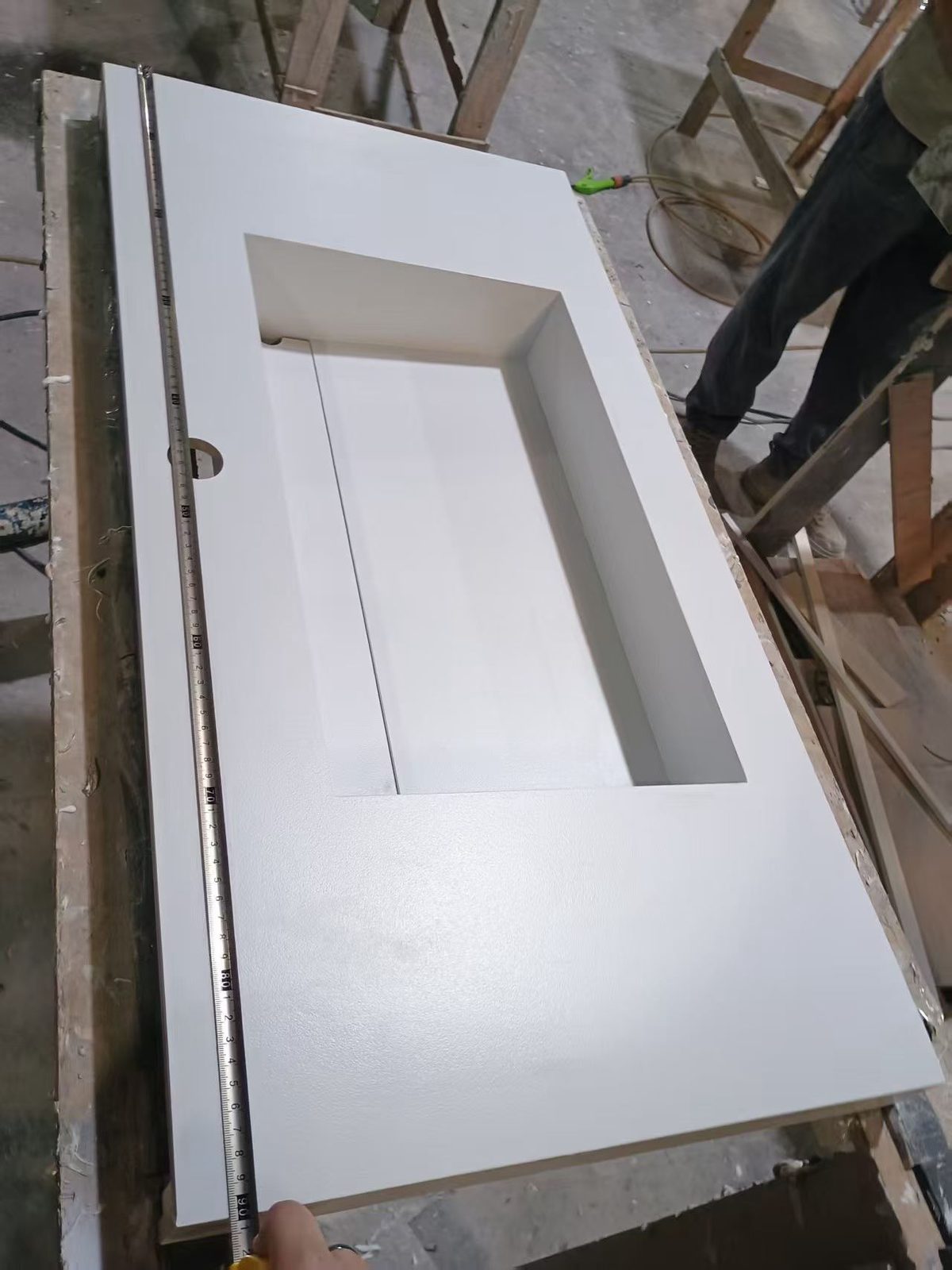
Inspect the joint in raking light. Hold the basin so light skims across the miter. A good joint nearly disappears; a rushed one shows as a visible line or a slight step. Do this before the basin leaves the supplier’s floor if you can — photographs flatten exactly the defect you are looking for.
Press the joint. A well-made miter feels flush and rigid under thumb pressure. If it flexes or you feel movement between the pieces, the adhesive bed is thin or the clamp time was cut short. That basin will not survive its first thermal season gracefully.
Ask which adhesive system is used. You don’t need the chemical datasheet memorized — you need to hear a specific product name, not “strong glue.” Suppliers who can’t name their adhesive usually can’t tell you its aging behavior either.
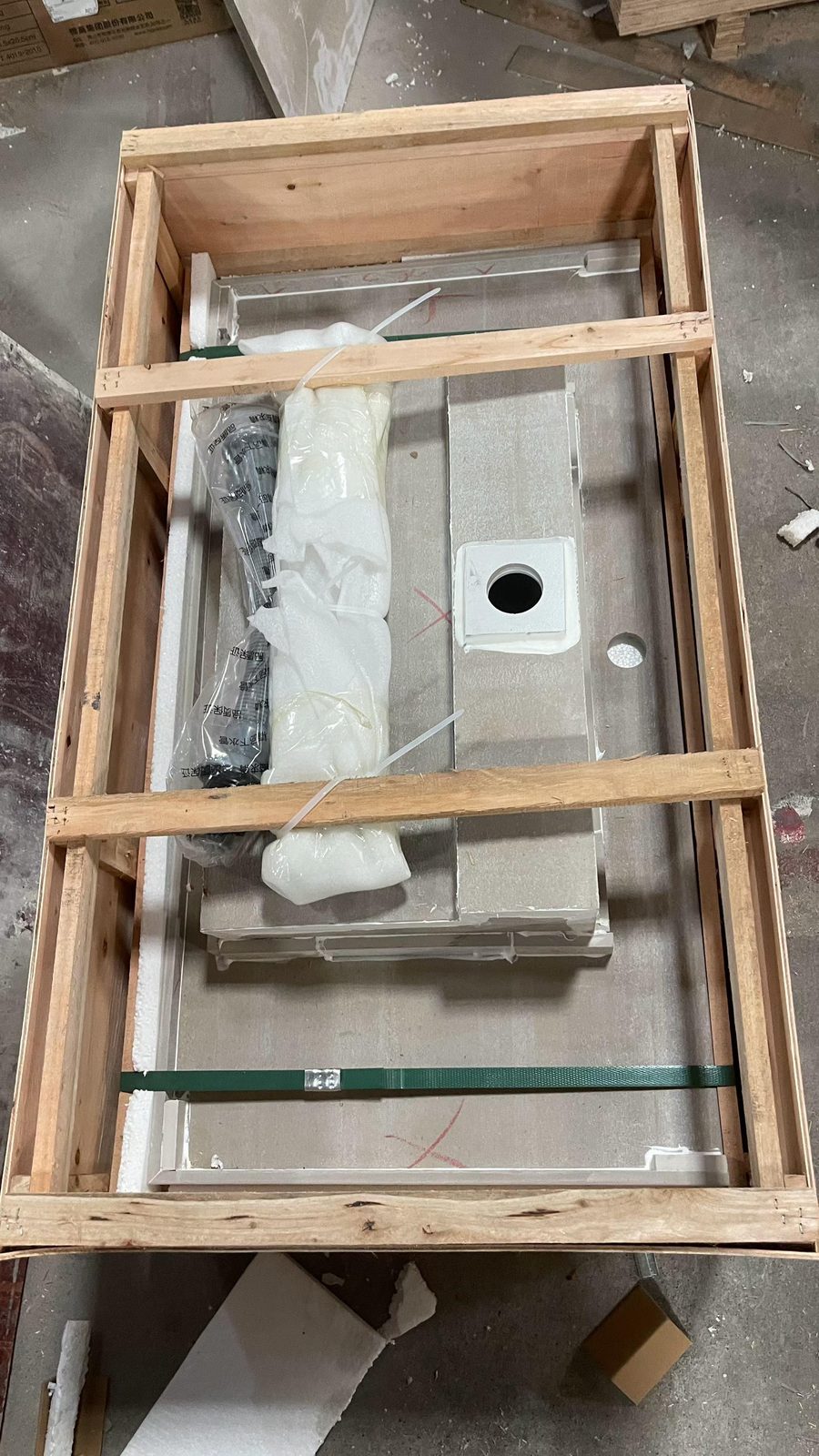
Inspect on delivery, before you sign. Stone vanity damage in transit is an industry-wide complaint — Amazon aggregate reviews put “damage upon arrival” at 6.8% of negative feedback for the category. Check the top for cracks running across it, look hard at corners and the drain cutout, and set the basin down to confirm it sits flat without rocking. Photograph any damage immediately; replacements move faster with clear evidence. And set the packing expectation before ordering: foam wrapping plus a wooden crate with internal framing and strapping is the standard that keeps stone intact — that is how our basins leave the factory.
Install it like the stone is unforgiving — because it is. The most common crack pattern in stone vanity tops has nothing to do with basin construction: uneven cabinet support creates stress points that hairline-crack the top around cutouts and corners. Level the cabinet, support the top across its full footprint, and never let the stone bridge an unsupported gap. An experienced installer knows this; a cheap one learns it on your basin. Our basin basics guide covers what to brief your installer before the box is even opened.
The short version for your next order: match the construction to the project’s failure budget. Hotels, brands, and forever homes — buy the bend with no joint. Tenders, rentals, and rush samples — buy glued, and inspect the joints like your margin depends on it, because it does.
Browse the hot-bent range — around 40 models, 60–120 cm — or configure your spec and request a quote. Tell us the project type and we’ll tell you straight whether hot-bent is worth it for you.
Frequently asked questions
How can I tell if a supplier really hot-bends their basins?
Ask for a photo or short video of the bending step itself — a factory that bends in-house has one; a trader reselling glued basins does not. Then ask which profiles are already tooled and what new tooling costs. If the basin arrives with a visible joint line at the bend, it was glued, whatever the listing said.
Will the seams on a glued sintered stone basin become visible over time?
Usually, yes. A good 45° miter can look nearly invisible on installation day, but adhesive ages: trade sources report yellowing and micro-gaps that collect soap scum and limescale after years of hot water and cleaning chemicals. Judge a glued basin by how it looks in year five, not on day one.
Is the hot-bent premium worth it for a hotel project?
For hotels, the math is about callbacks. One warranty claim — shipping a replacement basin internationally and paying an installer twice — can cost more than the construction premium across the whole order. Add daily housekeeping: a joint-free curve wipes clean in one pass, while mitered joints collect grime that staff scrub around.
My basin arrived cracked — should I accept a repair or demand a replacement?
Demand a replacement, and photograph everything before the crate is fully opened. Buyers consistently reject 'repaired to 95%' offers on cracked stone — a crack is structural, not cosmetic. Confirm your supplier's packing standard up front: foam wrapping plus a wooden crate with internal framing and strapping is what keeps stone intact in transit.
Can I order custom sizes in a hot-bent basin?
Within limits. Hot-bending needs a steel mold per profile, so sizes already tooled are straightforward and new profiles add tooling cost and time. Our catalogue covers around 40 models in the common 60–120 cm widths, and the factory builds the full hot-bent category beyond the catalogue — but a one-off odd size is where glued construction, cut to drawing with no mold, is often the practical answer.
Which construction is easier to keep clean?
Hot-bent, and it is not close at the bend itself. A glued joint sits exactly where water, soap, and toothpaste collect, and owners end up scrubbing around it — the same complaint piled onto vessel sinks, which force cleaning inside, outside, and behind the bowl. A continuous hot-bent curve has nothing to scrub around: one wipe, done.
Sourcing hot-bent basins for your next project?
Send your drawings and target quantities — we'll confirm feasibility from the factory floor.
Configure your inquirySpecifications verified against Vora Surfaces factory records. Editorial review applied.